

What if the reason your previous health changes didn't stick wasn't a lack of willpower, but a lack of a system? Most people feel overwhelmed by conflicting health advice and complex recipes that take hours to prep. It's exhausting to sift through endless blogs only to end up more frustrated than when you started. You want to know how to start anti-inflammatory diet routines that actually fit into a busy schedule without the constant mental load.
You deserve a wellness journey that feels organized and manageable rather than chaotic. We promise to provide a clear, science-backed roadmap to help you reduce physical discomfort and regain control over your health. This guide previews the essential food choices you need and the organized systems required to make your transition seamless. We'll cover everything from kitchen organization to simple tracking methods that turn digital advice into physical results. By the end of this article, you'll have a functional plan to move from information overload to daily action.
Key Takeaways
- Understand how chronic inflammation acts as a silent immune response and how your food choices either fuel or extinguish it.
- Learn how to start anti-inflammatory diet habits by auditing your pantry for the "Inflammation Big Three" and prioritizing nutrient-dense whole foods.
- Compare proven eating patterns like the Mediterranean and DASH diets to find the framework that fits your specific lifestyle needs.
- Discover why physical printable trackers are more effective than digital apps for building lasting habits and connecting food choices to physical sensations.
- Master a systematic approach to wellness that replaces information overload with a clear, actionable roadmap for long-term comfort.
What is an Anti-Inflammatory Diet and Why Start Now?
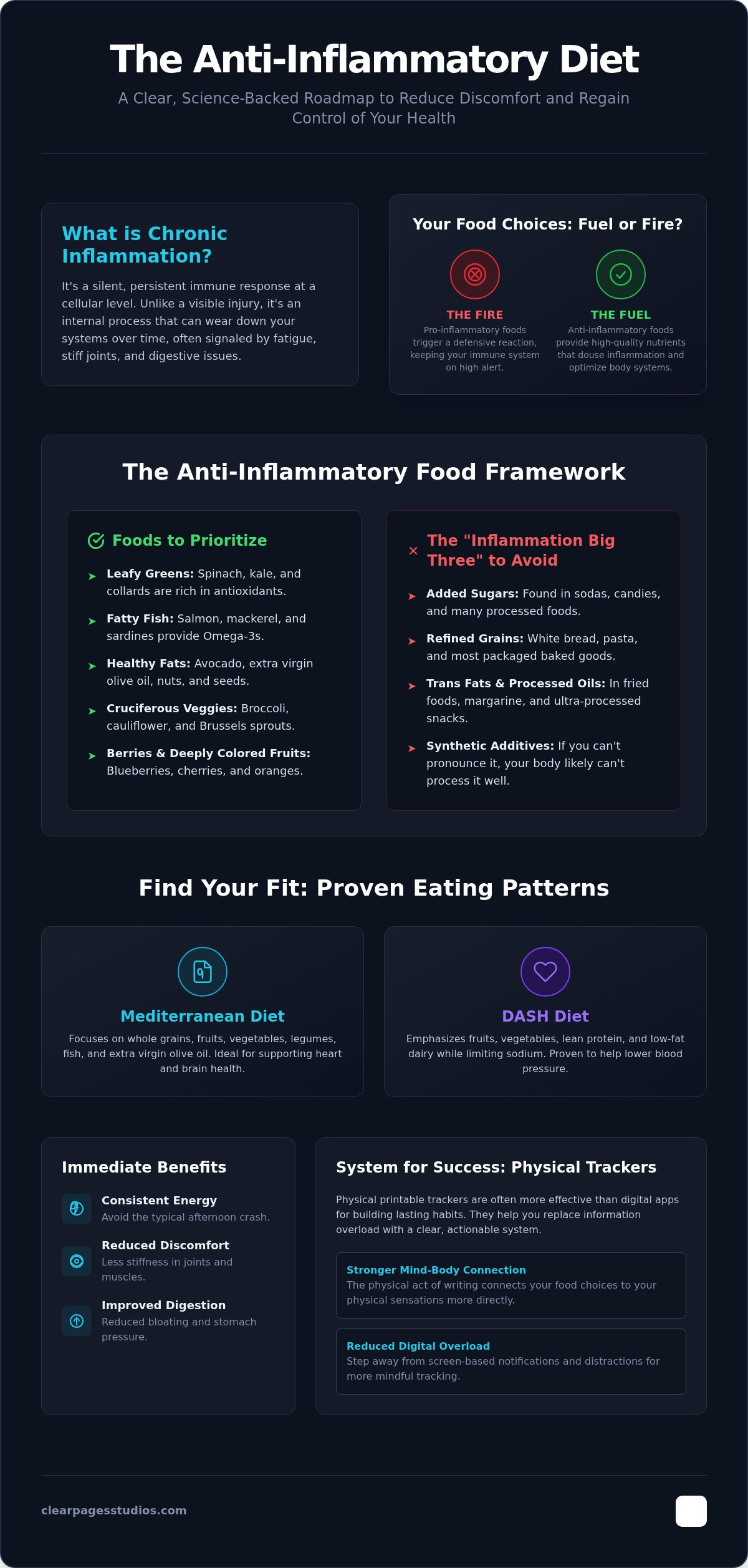
Chronic inflammation acts as a silent, persistent immune response. Unlike the visible swelling you see after an injury, this internal process happens at a cellular level, often without you realizing it. Your dietary choices act as either the water that douses the flames or the fuel that keeps them roaring. When you consume ingredients that the body doesn't recognize as high-quality fuel, it triggers a defensive reaction that eventually wears down your systems.
Understanding how to start anti-inflammatory diet habits begins with recognizing your body's red flags. Common symptoms like persistent fatigue, stiff joints, and digestive issues are often signals that your internal environment is overwhelmed. In 2026, we view this transition as biological optimization. It's no longer about restrictive dieting or simple weight loss. It's about fine-tuning your body to ensure every system runs at its peak capacity without the interference of chronic stress.
The Link Between Food and Immune Response
Ultra-processed ingredients are the primary culprits in modern inflammation. Refined sugars and synthetic additives trigger the release of pro-inflammatory cytokines, which keep your immune system in a state of perpetual high alert. This constant stress disrupts your gut microbiome, which is the foundation of your overall health. Scientific models like the Dietary Inflammatory Index (DII) help us understand which foods contribute to this burden and which alleviate it.
Speed is your ally when making this change. Don't get bogged down in the pursuit of a "perfect" plate or complex recipes. A quick-start approach that focuses on removing the most aggressive triggers is far more effective than a month of research without action. You want to simplify the transition by focusing on high-impact changes that provide immediate feedback. By learning how to start anti-inflammatory diet systems now, you stop the cycle of damage before it becomes a chronic condition.
Immediate Benefits of Reducing Dietary Inflammation
The rewards for shifting your habits appear quickly. Many people report a significant reduction in bloating and a surge in energy levels within the first week. These short-term wins are essential because they prove the system works. When you reduce the internal noise caused by inflammatory foods, your brain feels sharper and your body feels lighter. To complement these physical changes with a calming atmosphere, you can explore Lavender Essential Oil from Freshskin Beauty Ltd as part of your daily self-care routine.
- Reduced physical discomfort in joints and muscles.
- Consistent energy without the typical afternoon crash.
- Improved digestive regularity and reduced stomach pressure.
Beyond these daily improvements, you're building a foundation for long-term health. Lowering systemic inflammation is a proven strategy for maintaining heart health and preserving cognitive function as you age. This eating pattern serves as a precision tool designed to cultivate systemic calm within your body, and for those who wish to support this process with specialized professional care, you can explore Level 2 Profile Drive Subscription to find practitioners focused on structural and systemic health.
The Anti-Inflammatory Food Framework: Core Dos and Don’ts
Establishing a clear framework is the most effective way to eliminate decision fatigue. Learning how to start anti-inflammatory diet transitions requires a shift in how you view your grocery cart. Instead of searching for complex superfoods, focus on the "Inflammation Big Three" that cause the most systemic damage: added sugars, refined grains, and trans fats. These ingredients are metabolic triggers that keep your immune system in a state of high alert. By removing them, you immediately lower the internal "heat" in your body.
Replacing these triggers with high-utility powerhouses is the next step. Your menu should prioritize leafy greens, fatty fish, and cruciferous vegetables like broccoli and cauliflower. These aren't just healthy choices; they are biological tools that provide specific phytonutrients to combat oxidative stress. A reliable rule of thumb is the "Whole Food" rule. If a product comes in a box, check the ingredient list for synthetic additives. If you can't pronounce it, your body likely won't know how to process it efficiently. Using a structured tool like a printable wellness tracker makes identifying these triggers much faster.
Healthy fats are non-negotiable for systemic calm. Extra virgin olive oil and avocado provide the monounsaturated fats necessary for nutrient absorption and hormone production. These fats act as a buffer for your cells, protecting them from the friction of modern dietary stressors. For a comprehensive list of what to include, refer to this guide on foods that fight inflammation to build your foundation.
Foods to Prioritize for Maximum Impact
Omega-3 fatty acids found in salmon, sardines, and walnuts are your primary defense against cellular inflammation. These fats directly inhibit the production of inflammatory molecules. Pair these with colorful berries and turmeric to provide a steady stream of antioxidants. Don't overlook legumes; beans and lentils are rich in fiber, which supports a healthy gut microbiome and helps regulate the immune response. This combination ensures your body has the raw materials needed for constant repair.
Stealth Inflammatory Ingredients to Avoid
Many inflammatory ingredients hide in plain sight. "Healthy" salad dressings and pasta sauces are often loaded with hidden sugars and high-fructose corn syrup that spike your blood sugar. These spikes trigger an immediate inflammatory cascade. Artificial sweeteners and refined carbohydrates, like white bread and pastries, have a similar effect. They offer no nutritional value and act as a direct irritant to your digestive system. Mastery of how to start anti-inflammatory diet habits means becoming a vigilant label reader to catch these stealth ingredients before they reach your plate.
Comparing Popular Anti-Inflammatory Eating Patterns
Choosing a specific eating pattern provides the structure necessary to succeed. While the general framework remains the same, different systems offer unique advantages based on your health goals. The Mediterranean Diet is widely considered the gold standard for reducing systemic stress. It emphasizes high-quality fats and seasonal produce. Another effective option is the DASH Diet, which targets heart health by managing sodium levels while promoting nutrient density. For those prioritizing environmental impact alongside wellness, a plant-forward approach offers a sustainable path to biological optimization.
Deciding how to start anti-inflammatory diet routines depends on your current lifestyle. You don't need to overhaul your entire kitchen overnight. Look at your current pantry. If you already stock olive oil and nuts, the Mediterranean pattern is your logical starting point. If you struggle with high blood pressure, the DASH framework provides the specific parameters you need. According to Johns Hopkins Medicine on the anti-inflammatory diet, the key is consistency rather than choosing the "perfect" label.
Mediterranean vs. Standard Western Diet
The contrast between these two styles is stark. A standard Western diet relies on white flour and refined carbohydrates that cause rapid insulin spikes. In contrast, the Mediterranean approach uses whole grains that provide steady energy and fiber. Fat profiles also differ significantly. Western diets are often high in soybean and canola oils, which can be pro-inflammatory when consumed in excess. Mediterranean eating relies on extra virgin olive oil, a source of potent antioxidants. This pattern also includes a social component. Eating slowly and sharing meals reduces stress hormones, further lowering inflammation levels.
Customizing the Diet for Your Specific Needs
Flexibility is essential for long-term adherence. If you have sensitivities, you can easily adapt these patterns to be gluten-free or dairy-free. Replace wheat with quinoa or brown rice. Use coconut yogurt or nut-based cheeses if dairy causes digestive distress. Maintaining an anti-inflammatory lifestyle doesn't require a massive budget. Buy frozen vegetables in bulk; they are often picked at peak ripeness and retain their nutrient density. Dried beans and lentils are inexpensive, shelf-stable sources of fiber.
Focus on integrating specific superfoods that align with your goals. Add extra berries for cognitive support or increase your turmeric intake for joint health. When you understand how to start anti-inflammatory diet modifications that fit your budget and taste, the system becomes effortless. You are building a personalized toolkit for health, and if you want to maintain these habits while traveling, you can check out Parasta Tallinnassa for local recommendations that support your wellness goals, rather than following a rigid set of rules.
5 Steps to Start Your Anti-Inflammatory Journey Today
Execution is where most wellness plans fail. Knowing which foods to avoid is only half the battle; you need a system to ensure those choices are the easiest ones to make. When you're ready to learn how to start anti-inflammatory diet habits, you need a sequence of actions, not just a list of ingredients. This systematic approach simplifies the transition by removing the guesswork from your daily routine.
- Step 1: Audit your pantry. Remove ultra-processed triggers like sugary cereals and refined crackers. If it isn't in the house, you won't eat it.
- Step 2: Perimeter shop. Focus your grocery list on the outer edges of the store where fresh produce, wild-caught fish, and lean proteins are located.
- Step 3: Build a prep system. Dedicate two hours a week to washing greens and portioning proteins. Systems beat willpower when you're tired after work.
- Step 4: Use a physical tracker. Document your meals and how you feel two hours later. Linking food to physical sensations like bloating or energy spikes creates lasting change.
- Step 5: Commit to a 28-day reset. It takes approximately four weeks for your palate to recalibrate and for inflammation levels to begin their descent.
Ready to move from theory to action? Download The 28-Day Anti-Inflammatory Kitchen Reset to get the exact roadmap you need for a successful transition.
Performing a Professional Kitchen Audit
Open your pantry and read every label. You're looking for inflammatory markers like "partially hydrogenated" oils or high-fructose corn syrup. If a product contains these, it belongs in the bin. Organize your kitchen so healthy snacks like walnuts and seeds are at eye level. Create a "safe zone" in your pantry where every item is 100% compliant. This reduces the mental load of checking labels every time you want a snack.
The "Day 1" Action Plan
Start your first day with a focus on high-protein, high-fiber meals. A breakfast of eggs with spinach, a salmon salad for lunch, and roasted chicken with broccoli for dinner provides a stable foundation. You might experience minor sugar withdrawal or cravings in the first 24 hours. Manage this by staying hydrated and having compliant fats, like avocado, ready to go. Set up your weekly meal plan sheet before you go to bed. Having a physical plan for the next morning prevents the "hunger-driven" bad choices that often derail a new routine. This is how to start anti-inflammatory diet success from the very first hour.
Organizing for Success: Using Trackers and Meal Plans
Organization transforms abstract health goals into concrete daily actions. Many people struggle with how to start anti-inflammatory diet transitions because they rely on memory or willpower rather than a physical system. Digital apps often contribute to notification fatigue, leading to ignored alerts and abandoned goals. In contrast, a physical tracker placed on your kitchen counter or refrigerator acts as an immediate, tactile reminder of your commitment. This visible cue reduces the mental friction of deciding what to eat when your energy is low.
A "Wellness Journal" is a high-utility tool designed to link your food choices directly to physical sensations. Instead of just logging calories, you document how specific ingredients affect your joints, digestion, and mental clarity two hours after a meal. This data creates a personalized feedback loop. When you see a written record of how a specific refined grain caused a midday energy crash, the motivation to avoid that trigger becomes logical rather than emotional. This systematic approach removes the guesswork and helps you regain control over your internal environment.
Decision fatigue is the primary enemy of dietary change. Pre-planned grocery checklists and meal frameworks eliminate the "what's for dinner" panic that often leads to ultra-processed convenience choices. By using a structured system like the 28-Day Anti-Inflammatory Kitchen Reset, you move through your wellness journey with a curated selection of tools that prioritize your time and clarity. You are not just eating differently; you are building a digital-to-physical architecture for long-term productivity and health, and for those running their own wellness-focused storefronts, you can explore Countertop Card Machine to bring that same efficiency to your customer transactions.
The Power of the Printable PDF
The act of writing by hand improves cognitive retention and strengthens your commitment to a new routine. Printable PDF trackers offer the perfect balance of modern convenience and traditional accountability. You get instant delivery of your wellness tools, allowing you to print and start your journey immediately. A physical checklist serves as a constant, non-intrusive cue that keeps your goals front and center. It bridges the gap between digital advice and the physical reality of your kitchen.
Next Steps: Your 28-Day Roadmap
Successful biological optimization requires breaking the process into manageable weekly milestones. Start by focusing on hydration and trigger removal in week one, then progress to nutrient-dense substitutions in week two. By week three, your routine should feel automatic. Use a nutrition tracker to ensure you maintain a balanced intake of Omega-3 fats and fiber-rich legumes. This methodical cadence ensures you make constant progress without feeling overwhelmed by complexity.
Download the 28-Day Anti-Inflammatory Kitchen Reset and start today.
Take Control of Your Wellness Architecture
Success in biological optimization isn't about perfection. It's about the systems you put in place to support your daily choices. You now understand that chronic inflammation is a manageable internal state. Organized food frameworks are your primary tool for recovery. By focusing on high-utility whole foods and using physical trackers to link meals to physical sensations, you've mastered the fundamentals of how to start anti-inflammatory diet routines that last. This systematic approach removes the barriers between digital advice and physical results.
Eliminate the mental load of planning with tools designed for immediate application. The 28-Day Anti-Inflammatory Kitchen Reset provides expert-curated checklists and a clean, minimalist design for zero-distraction planning. You can access an instant PDF download to begin your transition right now. Get the 28-Day Anti-Inflammatory Kitchen Reset Guide and secure the roadmap you need for systemic calm. You have the knowledge. It's time to execute your plan and reclaim your energy with confidence.
Frequently Asked Questions
How long does it take to see results on an anti-inflammatory diet?
When learning how to start anti-inflammatory diet routines, you can expect to see initial results like reduced bloating and improved energy within 7 to 14 days. Significant changes in joint comfort or skin health typically take closer to 28 days as your systemic inflammation levels begin to stabilize. Consistency is more important than immediate perfection. Following a structured plan helps you track these incremental wins as they happen.
Can I drink coffee or alcohol on an anti-inflammatory diet?
You can consume both in moderation, provided they don't include inflammatory additives. Black coffee and green tea are actually rich in antioxidants that support your goals. For alcohol, stick to small amounts of red wine or clear spirits without sugary mixers. Avoid heavy beers and cocktails loaded with high-fructose corn syrup; these will spike your insulin and trigger an immune response.
Is an anti-inflammatory diet the same as a gluten-free diet?
An anti-inflammatory diet is not strictly gluten-free, though many people choose to limit gluten to reduce digestive stress. This eating pattern focuses on removing refined grains and ultra-processed wheat products rather than all gluten. If you don't have a specific sensitivity, whole grains like farro or barley are often acceptable. The priority is always on nutrient density and systemic calm for your body.
What are the best anti-inflammatory snacks for on-the-go?
The best anti-inflammatory snacks are portable whole foods that require minimal prep. Raw walnuts, almonds, and pumpkin seeds provide healthy fats and protein to keep you satisfied between meals. Hard-boiled eggs, berries, and sliced cucumbers with hummus are also excellent options. These choices prevent the hunger-driven bad decisions mentioned earlier in the guide by keeping your blood sugar stable throughout the day.
How do I start an anti-inflammatory diet on a tight budget?
You can learn how to start anti-inflammatory diet habits on a budget by prioritizing shelf-stable staples and frozen produce. Dried beans, lentils, and canned sardines are inexpensive sources of fiber and Omega-3s. Frozen vegetables are often more affordable than fresh and retain their nutrient profile. Buying in bulk and using a pre-planned grocery list ensures you only spend on items that serve your wellness architecture.
Do I need to take supplements while following this eating plan?
You should focus on obtaining nutrients from whole food sources before considering supplements. While Omega-3 or turmeric capsules can provide additional support, they don't replace the foundational benefits of leafy greens and fatty fish. Always consult a healthcare professional before adding supplements to your routine. Use your physical tracker to see how your body responds to food changes before introducing synthetic alternatives.
What happens if I have a "cheat meal" that causes inflammation?
A single meal won't derail your entire journey, but it might cause temporary discomfort or bloating. If you consume inflammatory triggers, simply return to your structured meal plan immediately. Don't let a mistake lead to a weekend of poor choices. Use your wellness journal to document any physical sensations that follow; this data helps reinforce why you chose this lifestyle in the first place.
Can children follow an anti-inflammatory diet safely?
Children can safely follow an anti-inflammatory eating pattern because it emphasizes whole, nutrient-dense foods. This approach replaces processed snacks and sugary cereals with fruits, vegetables, and healthy proteins. It's a foundational way to support their developing immune systems and energy levels. Always ensure they receive adequate calories and a wide variety of nutrients to support their specific growth stages and daily activity levels.


