

What if the most effective way to break your cycle of digital fatigue isn't another app, but a simple sheet of paper? It's easy to feel stuck in a negative loop when your phone is constantly demanding your attention. You want a way to track positive thoughts without adding more screen time to your life. Using a gratitude journal printable offers a physical, grounded solution that fits into your existing schedule. It removes the barriers of complex digital tools and lets you focus on your well-being immediately.
You likely recognize that finding time for self-care feels impossible when your to-do list is endless. We agree that wellness should be accessible, efficient, and direct. This guide teaches you how to reduce stress and improve mental clarity through a structured, five-minute habit. You'll discover how to build a physical record of your personal growth that helps lower anxiety. We will walk through the practical steps to turn a digital download into a lasting wellness habit that simplifies your life without adding unnecessary complexity.
Key Takeaways
- Understand how a structured PDF template helps you transition from digital fatigue to physical mindfulness.
- Learn the science behind neuroplasticity and how consistent tracking creates positive neural pathways in your brain.
- Establish a lasting habit in just five minutes a day by using a gratitude journal printable designed for efficiency.
- Master the "Sacred Five" and "Subtraction Method" to keep your reflections specific and meaningful, even on difficult days.
- Access minimalist, ready-to-use trackers that simplify your wellness journey with instant downloads and clean designs.
What is a Gratitude Journal Printable and Why Does it Work?
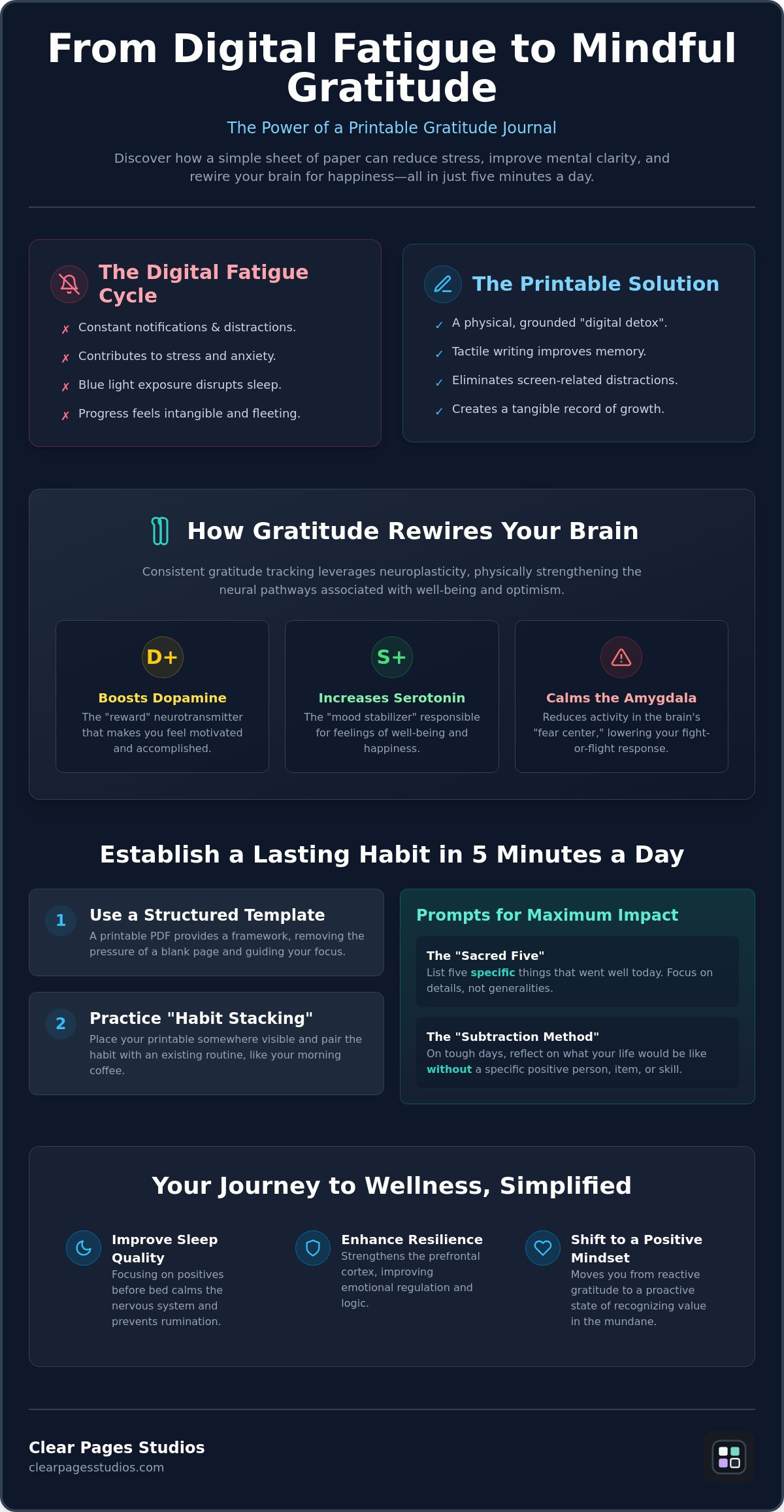
A gratitude journal printable is a structured PDF template designed to facilitate daily reflection. Unlike a blank notebook, these printables provide a specific framework that guides your focus toward the positive aspects of your day. Understanding What is a Gratitude Journal helps clarify its role in positive psychology. It is a tool used to move you from "transactional" gratitude to "dispositional" gratitude. Transactional gratitude is reactive; it only appears when something good happens or someone does you a favor. Dispositional gratitude is a proactive mindset. It is the ability to recognize value in the mundane, such as a quiet morning or a reliable vehicle. The printable acts as the training ground for this mental shift.
Writing by hand engages your brain differently than tapping on a smartphone screen. Research suggests that the tactile act of using a pen and paper improves emotional processing and memory retention. You aren't just logging data; you're internalizing the experience. This physical interaction creates a "digital detox" moment in your day. Placing your printed tracker on your nightstand is an effective example of habit stacking. By pairing the physical paper with an existing routine, like drinking your morning coffee or setting your alarm, you ensure the habit sticks without extra effort.
The Difference Between a Journal and a Tracker
Traditional journals usually focus on long-form reflection and deep emotional processing. While valuable, this can feel overwhelming if you're short on time. Trackers prioritize consistency and identifying patterns over weeks or months. A hybrid gratitude journal printable offers the best of both worlds. It provides enough structure to guide your thoughts without requiring an hour of your time. This balance makes it the ideal entry point for beginners who want the benefits of reflection without the pressure of a blank page.
Why 'Printable' Beats 'Digital' for Mental Health
Digital tools often contribute to the very stress they aim to solve. Every time you pick up your phone to use an app, you risk seeing a work notification or a stressful news headline. A physical printable eliminates blue light exposure, which is essential if you practice gratitude before bed to improve sleep quality. There is also a distinct psychological satisfaction in physically checking off a daily entry. It creates a visible, tangible record of your commitment that a digital interface simply cannot replicate. You can see your progress grow with every sheet you fill.
The Science of Gratefulness: How Tracking Rewires Your Brain
Neuroplasticity is your brain's physical response to repetitive thought patterns. When you consistently use a gratitude journal printable, you are performing resistance training for your neural pathways. Every time you identify a positive moment, you strengthen the connections associated with well-being and optimism. This process is essential because the human brain is naturally wired with a negativity bias. This evolutionary trait helped our ancestors survive by focusing on threats, but it often leaves modern individuals stuck in loops of anxiety and dissatisfaction. Practicing the science of gratitude acts as a corrective lens, forcing your brain to scan the environment for benefits rather than just burdens.
The biological impact of this practice is measurable. When you express gratitude, your brain releases dopamine and serotonin. These are the primary neurotransmitters responsible for making you feel "good" and stabilizing your mood. This "gratitude circuit" becomes more efficient over time. A foundational proof point for this is the "Three Good Things" study. Researchers found that participants who wrote down three things that went well each day reported significantly higher happiness levels six months later. The effect wasn't temporary; the act of journaling created a self-sustaining cycle of positive recognition.
The Prefrontal Cortex and Emotional Regulation
Consistent tracking reduces activity in the amygdala, which is the brain's fear center. When the amygdala is less reactive, your "fight or flight" response isn't triggered by minor daily stressors. Regular use of a gratitude journal printable strengthens the prefrontal cortex's sensitivity to positive stimuli. This part of the brain manages logic and emotional regulation, allowing you to process setbacks without spiraling. This shift also improves sleep quality. By focusing on positive data points before bed, you prevent the brain from ruminating on negative events, leading to a calmer nervous system.
Long-term Cognitive Benefits of Daily Reflection
Daily reflection builds a reservoir of resilience. When you face challenging times, having a physical record of past "wins" provides objective evidence that difficulty is temporary. This leads to the "Gratitude Carryover" effect. A single entry in the morning can influence your mood and decision-making for hours afterward. Over time, you move from the effort of "counting blessings" to developing a permanent grateful disposition. Starting with a minimalist tracker from Clear Pages Studios helps you bridge the gap between scientific theory and a practical daily habit.
How to Use a Gratitude Journal for Maximum Impact
Consistency matters more than intensity. To get results, establish what we call the "Sacred Five." This involves dedicating exactly five minutes at the same time every day to your gratitude journal printable. By limiting the time, you remove the psychological barrier of "not having enough time" for self-care. It’s a manageable window that fits into even the most crowded schedules. This structured approach ensures that the research on gratitude and happiness translates into a practical, daily reality for you.
Step 1: Choose Your Timing (Morning vs. Evening)
Your choice of timing dictates the "flavor" of your practice. Morning journaling is about priming. You are setting a positive filter for your brain to use throughout the day. If you choose the evening, you are processing the day's events. This helps clear mental clutter and lowers cortisol levels before sleep. Consider these options for your routine:
- Morning journaling: Primes the brain to look for opportunities and benefits during the day.
- Evening journaling: Closes the day by resolving stress and improving sleep quality.
Use the "Habit Anchor" technique to ensure you don't forget. Pair your journaling with an existing action, like waiting for your morning tea to steep or sitting down after you brush your teeth. The physical presence of the paper acts as a visual cue to begin.
Beyond just listing items, you must incorporate "The Why." Adding a single sentence explaining why a specific moment mattered deepens the emotional connection. For example, instead of writing "I'm grateful for my lunch," try "I'm grateful for my lunch because the quiet break helped me reset for the afternoon." This second sentence forces your brain to relive the positive emotion, which is where the real neurological change happens. At the end of each week, take two minutes to review your entries. This reflection helps you identify recurring themes and patterns in what truly brings you joy.
Step 2: The 'Small Wins' Strategy
Many people fail because they wait for "big life events" to feel grateful. If you only write when you get a promotion or go on vacation, you'll rarely journal. Focus on micro-moments. These are the mundane tasks that actually make up 90% of your life. Find gratitude in the reliability of your commute, the warmth of a clean towel, or the efficiency of a completed chore. The "specificity rule" states that the more granular your observation, the more effective the practice. Writing "the smell of fresh morning coffee" is always more impactful than writing "my life."
Using a gratitude journal printable provides the necessary constraints to keep you focused on these small wins. It prevents the "blank page syndrome" that often leads to generic, repetitive entries. By following this structured method, you transform a simple list into a powerful tool for mental clarity. You aren't just recording events; you're actively curating a more positive perspective on your daily existence, which can be further enriched by following positive community updates from Ben Stelter School Fundraiser News.
Overcoming Journaling Fatigue: Prompts and Best Practices
Journaling fatigue is the primary reason many wellness habits fail. You might sit down with your gratitude journal printable and feel an immediate mental block. The most common objection is the belief that nothing significant happened today. When you feel stuck, remember that gratitude isn't about finding life-altering miracles every twenty-four hours. It's about noticing the systems and moments that worked as intended. If you're struggling to find a "win," try the Subtraction Method. Imagine your life without a basic necessity you currently take for granted, such as indoor plumbing, electricity, or a reliable vehicle. This sudden shift in perspective reveals the abundance already present in your routine.
Sensory prompts are another effective way to bypass emotional blocks. Instead of searching for a feeling, search for a fact. What is one thing you smelled today that was pleasant? What did you hear that made you pause? These physical observations require less emotional energy than deep reflection. This makes them perfect for days when you feel drained. It's also vital to realize that skipping a day is not a failure. Don't let a missed entry turn into a week of avoidance. Restarting is as simple as picking up your pen tomorrow morning. There is no need for guilt; the goal is long-term resilience, not a perfect attendance record.
10 Non-Cliché Gratitude Prompts for Beginners
Generic prompts often lead to generic answers. Use these specific questions to dig deeper into your daily experiences:
- What is a "boring" thing that went exactly as planned today?
- Who is someone from your past you would like to thank, even if you're no longer in touch?
- What is a challenge you faced recently that taught you a new skill?
- Which piece of technology made your morning easier today?
- What is a specific comfort in your home that you often overlook?
- What was the most refreshing thing you drank or ate today?
- Which part of your commute or workspace do you find most functional?
- What is a mistake you made that you're actually glad happened?
- Which song or sound brought you a moment of calm today?
- What is one goal you're currently working toward that excites you?
Dealing with 'Gratitude Burnout'
Forced positivity can often backfire. This is known as toxic positivity, where you feel pressured to mask real struggles with a "blessed" narrative. Real gratitude acknowledges that life is difficult while still identifying small points of light. If you feel burnt out, switch your format. You don't always have to write a list. Try drawing a small sketch or writing a short letter of appreciation to yourself. When you're truly overwhelmed, use the "One Thing" rule. Forget the three or five entries; just find one single item. This maintains the habit without the pressure of a full page. To keep your practice fresh and organized, you can browse our collection of minimalist trackers designed to simplify your daily reflection.
Using a high-quality gratitude journal printable helps maintain this focus by providing a clean, distraction-free space. It removes the friction of starting from scratch. By focusing on these practical strategies, you ensure that your gratitude practice remains a source of relief rather than another item on your stressful to-do list.
Instant Wellness: Ready-to-Use Printables from Clear Pages Studios
Clear Pages Studios provides high-quality, minimalist PDF trackers designed for immediate utility. We prioritize the transition from a digital file to a physical tool to help you reclaim your focus and reduce digital fatigue. When you choose a gratitude journal printable from our studio, you're opting for a streamlined system that removes the barriers to entry. The process is simple: download, print, and begin. This frictionless approach ensures you spend your time practicing gratitude rather than navigating complex software or waiting for shipping. You get a professional framework that's ready to use in seconds.
Our trackers are designed to integrate into a complete wellness lifestyle. Whether you're following "The 28-Day Anti-Inflammatory Kitchen Reset" or looking for "Bundle & Save Packages" to organize your entire routine, our products provide the necessary structure. These tools work together to reduce stress and improve mental clarity, which are essential components of an anti-inflammatory lifestyle. By using physical paper, you create a dedicated space for growth that exists entirely outside the distractions of your digital devices. It's a practical way to ensure your self-care habit actually lasts.
Why Clear Pages Studios Designs Work
Efficiency is the core of our design philosophy. We use minimalist layouts that don't overwhelm you with "busy" graphics or unnecessary fluff. This clean aesthetic allows your thoughts to remain the primary focus of the page. Our formatting is specifically optimized for home printing to be ink-friendly and cost-effective. Every gratitude journal printable is available in standard A4 and Letter sizes; this ensures universal compatibility with your home or office printer without any scaling issues.
Starting Your Journey Today
The most effective way to build a habit is to start immediately. Stop scrolling through wellness advice and start writing your own record of growth. A one-time purchase of a printable tracker offers significantly better value than a recurring app subscription that you might forget to use. You own the file forever, allowing you to print new pages whenever you need them. This "print once, use forever" model supports your long-term wellness journey without adding to your monthly expenses. You can Browse our collection of Wellness Journal Printables to find the right tool for your daily practice today.
Build a Lasting Habit for Mental Clarity
You now have the framework to transition from digital fatigue to a grounded, physical practice. By engaging in the "Sacred Five" each day, you leverage neuroplasticity to build a more resilient mindset. You've learned that focusing on specific micro-moments is the key to bypassing burnout and creating a tangible record of personal growth. To complement your written reflections with professional visual memories, learn more about Moments In Bloom Photography and their approach to capturing family milestones. A gratitude journal printable removes the complexity of digital apps and provides an immediate, tactile way to reduce anxiety. This shift from reactive to proactive thinking is a simple but powerful tool for your wellness journey.
Our minimalist designs focus on high utility and ease of use. These templates are specifically optimized for home printing and ready to integrate into your daily schedule. Thousands of users already rely on these professional tools to simplify their wellness routines with the benefit of instant PDF delivery. Download your ready-to-use Wellness Journal Printable now and start your five-minute habit today. You deserve a clear, organized path toward a more grateful disposition. This small investment in your time creates a physical record of progress that digital tools simply cannot replicate.
Frequently Asked Questions
How long does it take to see results from a gratitude journal?
You'll likely notice a small mood boost immediately after your first session. Significant neurological changes typically occur after consistent practice for approximately 21 to 30 days. Research from foundational studies shows that participants felt significantly happier six months after their initial week of journaling. Consistency is more important than the length of each individual entry, so focus on showing up daily.
What if I feel like I have nothing to be grateful for?
Use the "Subtraction Method" when you feel stuck. Imagine your life without a basic necessity you currently take for granted, like your refrigerator or a reliable internet connection. You can also focus on sensory facts rather than deep emotions. Identify one pleasant sound or smell you encountered today. These micro-moments are the foundation of a successful practice when you're feeling emotionally drained.
Is it better to write in a gratitude journal in the morning or at night?
The best time depends on your specific goal. Morning journaling is ideal for priming your brain to scan for positives throughout the day. Evening journaling is better for processing events and reducing cortisol levels before sleep. Pick a time that you can stick to consistently. Pairing the practice with an existing habit, like your morning tea, ensures you don't forget.
Should I use a digital app or a printable PDF for journaling?
Using a gratitude journal printable is often better for reducing digital fatigue and improving focus. Physical writing engages different neural pathways than typing, which helps with emotional processing. A PDF tracker also eliminates the distraction of notifications and blue light. This makes it a superior choice for a digital detox and ensures your reflection time remains private and focused.
Can kids use a gratitude journal printable?
Yes, kids can benefit greatly from using a structured gratitude journal printable. It helps them develop emotional literacy and a positive mindset from a young age. Choose a minimalist design that provides enough space for drawings or short sentences. This practice teaches children to identify small wins and encourages them to express their feelings in a healthy way without the pressure of a blank page.
How many things should I list in my journal every day?
Listing three specific things is the standard recommendation for maximum impact. While some people prefer five, quality always beats quantity. It's more effective to write one detailed sentence about why a specific event mattered than to list ten generic items without reflection. If you're overwhelmed, follow the "One Thing" rule and just find a single positive point to record for the day.
What is the 'Three Good Things' exercise?
The "Three Good Things" exercise is a scientifically backed method where you write down three positive events from your day. For each item, you must also include a brief explanation of why that event happened or why it was good. This simple practice was shown in a 2005 study to increase happiness and decrease depressive symptoms for up to six months. It's the core of most successful gratitude habits.
Do I need to be a 'good writer' to keep a gratitude journal?
You don't need any writing skills to keep a successful journal. This practice is for your benefit only, so grammar and style are irrelevant. Focus on being honest and specific rather than eloquent. Use bullet points, short phrases, or even simple sketches if that feels easier. The goal is to train your brain to notice the good, not to produce a literary masterpiece.


